
Note: Due to my limited availability earlier this week after episode three’s premiere (and the serendipitous early-release of episode four) I’ve combined my thoughts on both last Sunday’s “A Knight of the Seven Kingdoms” and the newest installment here for a Friday edition.
The third episode of A Knight of the Seven Kingdoms, titled “The Squire,” expertly set up the real challenge Ser Duncan the Tall has taken on by living the life of a hedge knight: Choosing honor and chivalry in the face of injustice, regardless of consequence.
And while that primary theme of chivalry is apparent in George R.R. Martin’s original novellas, and many of the best scenes in this weeks’ episodes were pulled right from the pages, there are changes and additions being made to pivotal moments.
For example, showrunner Ira Parker and the writers’ room seem to be making the deliberate choice to add the subtext of fatherhood to nearly everything Dunk does when it comes to his squire and the “trial of seven.”
Allow me to break it down for you using one moment at a time, starting with how Dunk responded when Egg returned from his adventurous (and adorable!) morning training with Thunder.
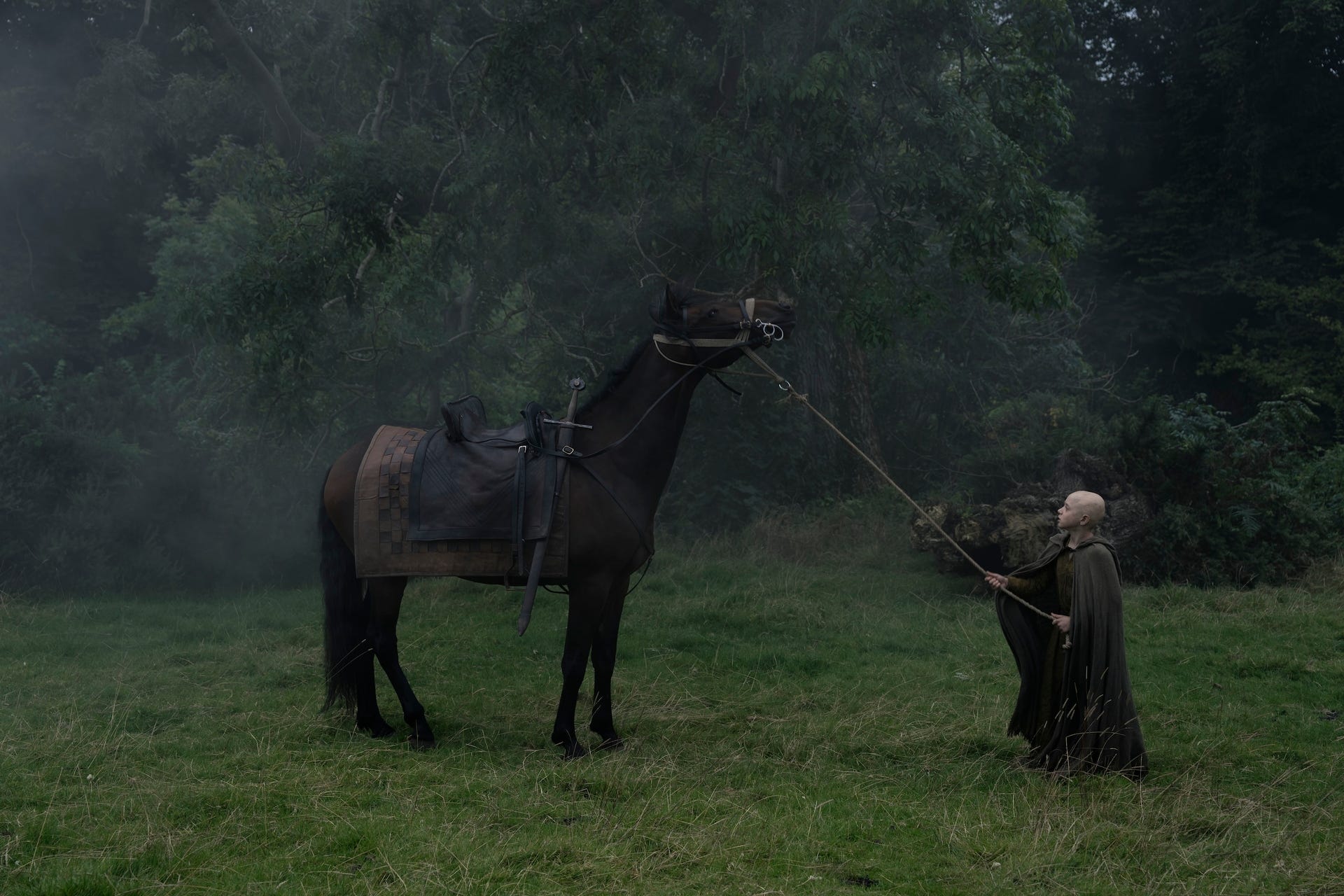
Instead of holding to his threat to make Egg ‘eat his fist’ if he doesn’t obey orders, Dunk chooses to teach his squire the art of sewing
In Martin’s version of events, Egg never wakes up early to train Thunder like we see in the show. Instead there’s a short scene explaining how Dunk “prodded” Egg awake and asked him to saddle one of the horses. When Egg asks about breakfast, that’s when the show and book line up perfectly: Dunk says they’ll eat salt beef after the work is done, and Egg talks back:
“I’d sooner eat the horse,” Egg said. “Ser.”
“You’ll eat my fist if you don’t do as you’re told. Get the brushes.”
In the book they get the horse ready together, and Dunk merely thinks to himself that Egg “was a good worker once he put his mind to it.”
The show takes a totally different approach and it pays off. The show-version of Dunk tries to hold to this threat of a beating if his squire doesn’t obey, but he can’t follow through. In a brilliant move to connect the characters further, the scene turns into a gentle teaching moment where Dunk shows Egg how to sew, and they share a scrumptious breakfast of meat and eggs and bread together (no hard salt beef in sight).
By making this change (and adding sewing into the list of chores), the writers manage to neatly tie the idea of chivalry to positive masculinity.
Raymun Fossoway’s rant against Targaryens helps contextualize the decades of injustice bearing down on Dunk
In the book, Raymun does indeed privately speak about how Aerion is a “bad piece of work,” but nothing so aggressive as his speech in the show. The change includes the word “alien,” which may sound anachronistic if you associate it with outer space but is actually a Middle English term for someone belonging to another place:
They’re incestuous aliens, Duncan! Blood-magickers and tyrants who’ve burned our lands, enslaved our people, dragged us into their wars without a mote of respect for our history or our customs. Every pale-haired brat they saddled on us has been madder than the last, gods know how.
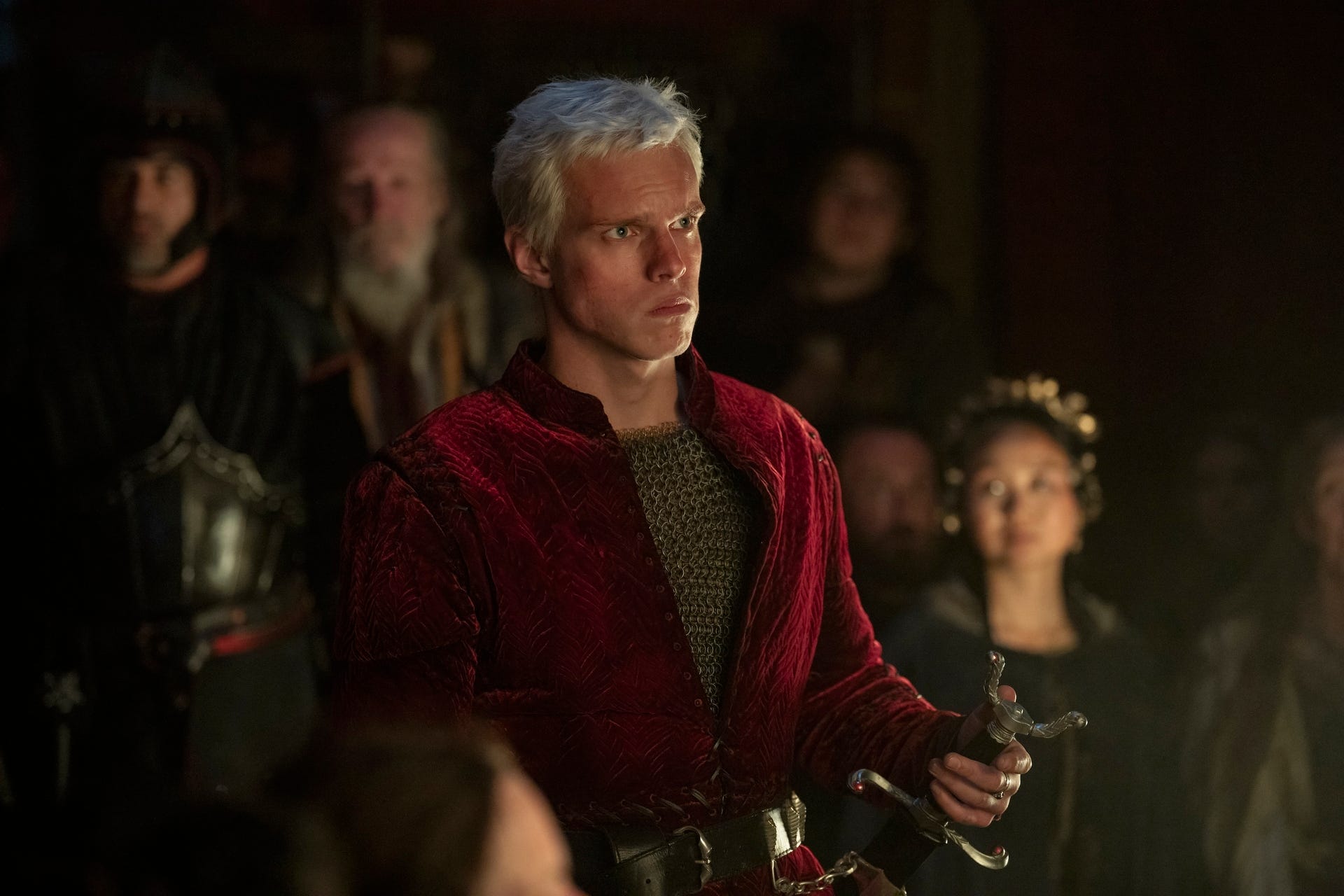
Raymun’s show-invented rant is here to remind the viewer that we’re a couple centuries in to the Targaryens conquering and ruling Westeros (after arriving from Essos on dragonback). And while they have no dragons left with which to terrorize people into submission, Aerion is a beautiful example of how certain Targaryens have been emboldened to think they are indeed superior and deserve unquestioned authority.
This is yet another reason why the tender-hearted relationship between Dunk (a lowborn-turned-knight) and Egg (a lonely Targaryen boy) is so meaningful. In many ways they’re just two boys trying to break they cycles of violence they were born into.
Which brings me to…
The reveal of who Egg really is was masterfully adapted and amped up thanks to a small change in the show’s perspective
An oft-noted choice Martin made with the A Knight of the Seven Kingdoms book is keeping the whole story told from Dunk’s point-of-view, unlike the A Song of Ice and Fire novels which hopped from person and place with each chapter. So far the show has stayed loyal to Martin’s choice only ever showing us what’s happening around Dunk.
That changed in episode three.
Just as Raymun is giving Dunk a hard dose of reality about the dishonorable nature of (some) Targaryens, we see what’s happening a few tents away with Tanselle’s puppet show. Tension mounts as Aerion walks in, and Egg recognizes the danger of the moment. This change let us (the audience) feel a mounting dread even though Dunk believes all is well as he gets tipsy on cider.
Then of course all hell breaks loose when Egg runs to Dunk for help and he actually barrels into the puppeteering tent to stop Aerion from hurting Tanselle anymore than he already has. Here’s where another change happened — the show increases the visceral dread of the moment by having Aerion’s guards force Dunk to place his teeth against the stage’s edge. In the book Aerion was going to have them hammered out, but a curbstomp approach really takes this light-hearted episode into American History X territory fast. The worst is happening. How can it possibly be stopped?
With the hope that little Aegon Targaryen carries, of course.
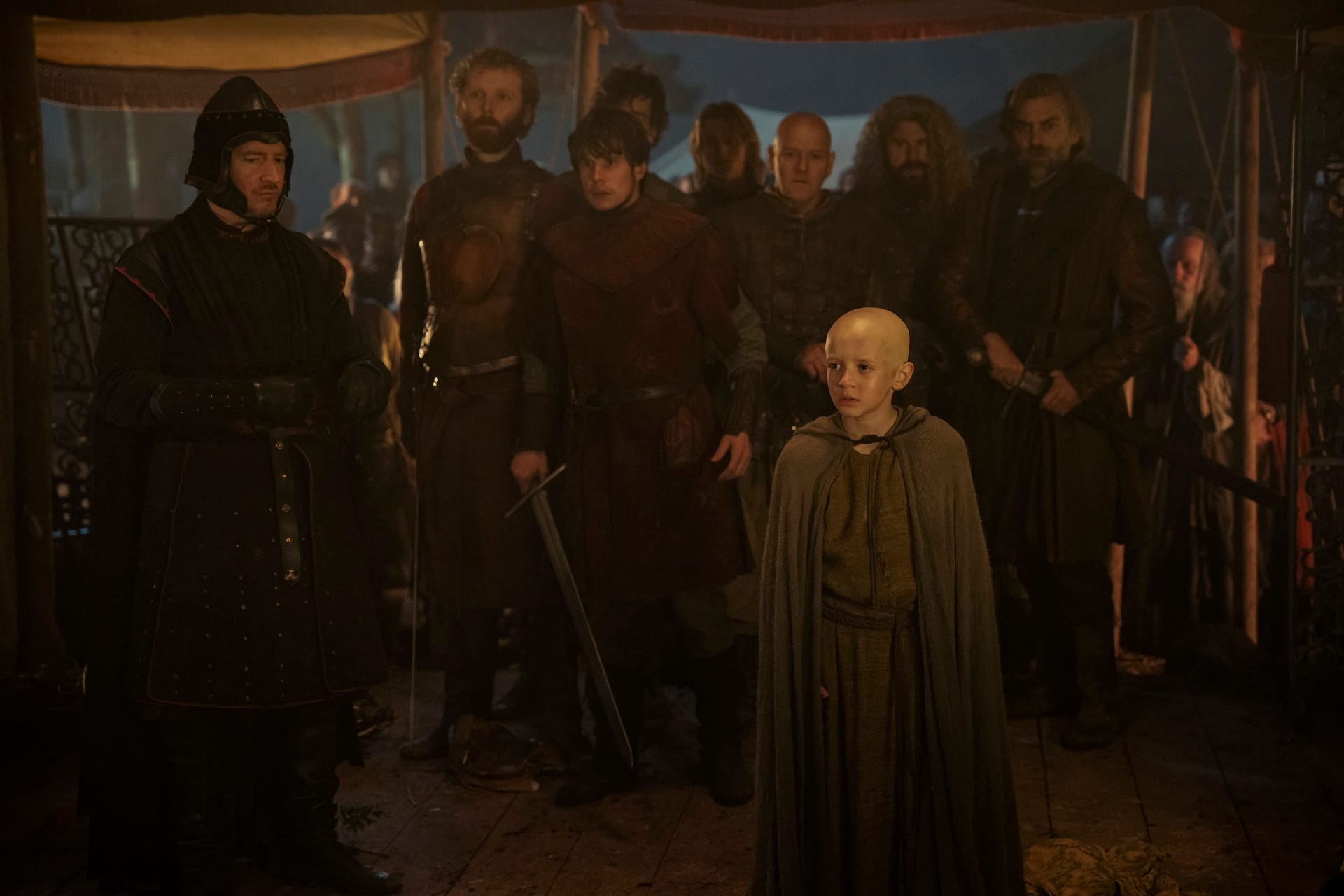
The reveal that Egg is a nickname for Aegon (the fourth son of Maekar, who himself is the fourth son of current King Daeron) comes from the young boy’s desire to help. To be a true squire to a true knight who will protect the innocent of the realm.
I can’t think of a better way the show could have pulled off this moment, including all of the near-comical reaction shots from everyone in the room being timed to an impeccable score from Dan Romer.
Which brings me to…
Episode four picks up late the next day, after Egg succeeded in saving Dunk from instant punishment. Once again there are changes to the book’s scenes that highlight Dunk’s paternal side
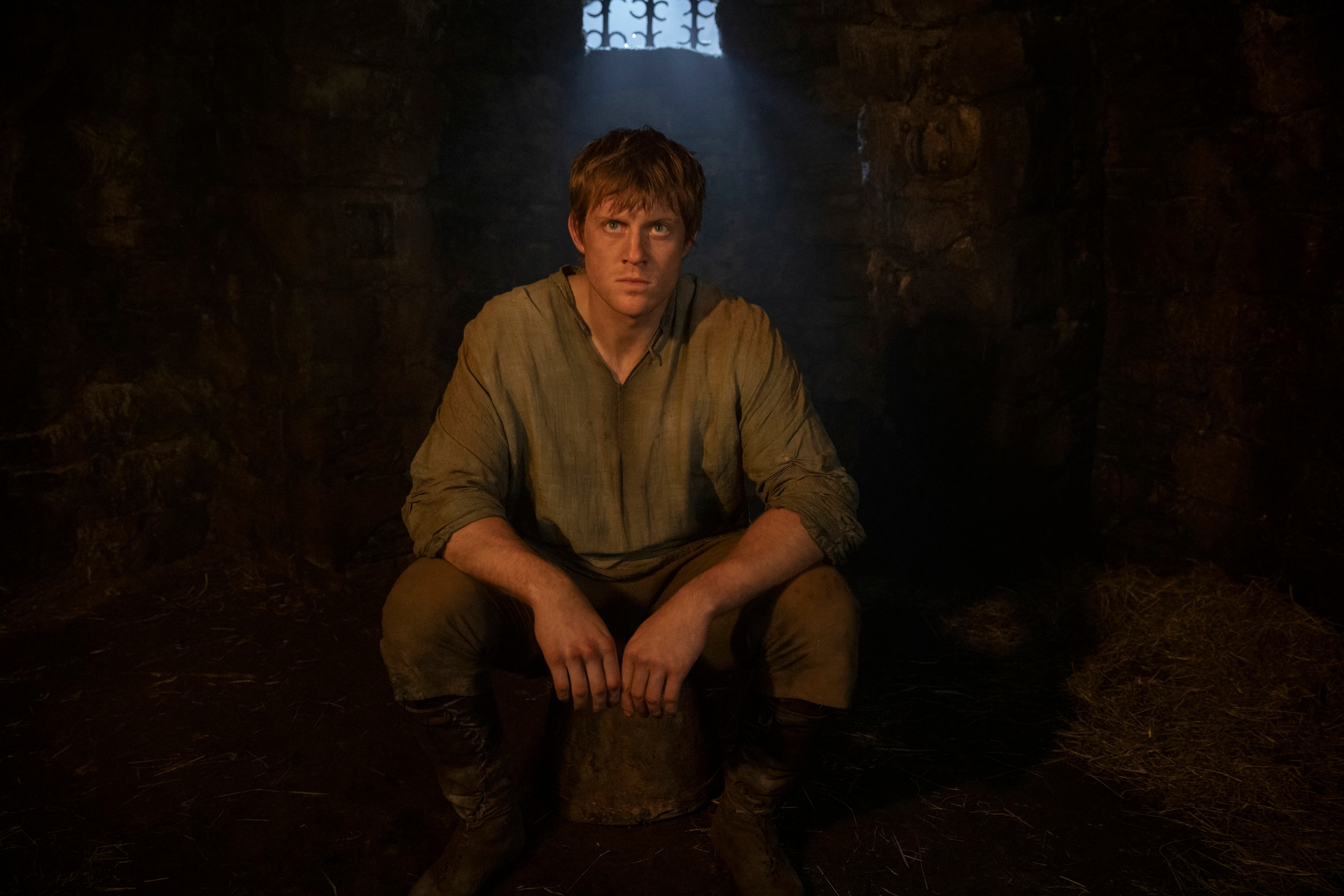
The opening minutes of this episode match the book very closely. Dunk is sitting in a tower, alone and unsure of his fate, when Egg comes in with two guards and a tray of food. The dialogue and staging of the scene is almost word-for-word from the book up to the moment when Dunk asks if Egg lied about being a Targaryen just to make a fool of him.
In the book, Egg replies no and then it reads: “The boy’s eyes filled with tears, but he stood there manfully.”
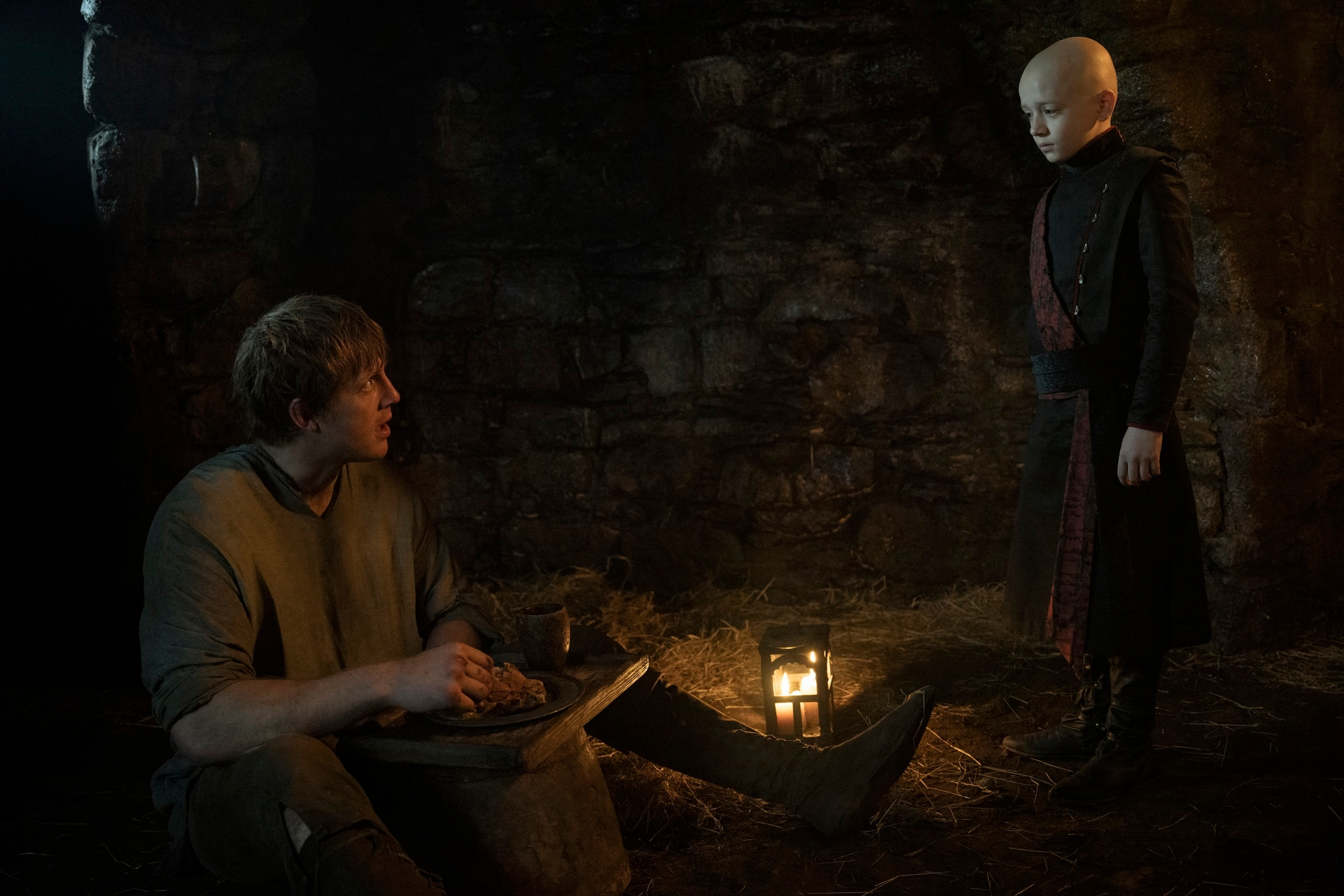
The show makes a different choice. Instead of standing in front of Dunk, Egg goes to sit against the wall with his knees pulled up to his chest. He’s the portrait of a cowering kid getting lectured by their dad at the dinner table. The change in power dynamics is palpable.
In the book, Dunk lets Egg give his full explanation about wanting to squire for Daeron, and how it was his brother’s idea to shave his head as a way to hide from their guards. Dunk hears him out, looks at Egg “thoughtfully,” and then just says: “I thought you were like me. Might be you are. Only not the way I thought.”
They share a joke about how they are technically from the same place (King’s Landing), except Egg is from the castle on the hill while Dunk came from the slums of Fleabottom.
But in the show, Dunk interrupts Egg with harsh interjections and chastisements, telling him that he surely knew he was doing something wrong. When Egg looks tearfully at him, Dunk just roughly says “dry your eyes.” The moment stands in stark opposition to the choice Dunk made in the previous, when he opted for connection and gentleness with Egg instead of toxic masculinity. We see here how the anger and fear is starting to overwhelm both Dunk and his squire.
(Side Note: The stakes are life-or-death with a “trial of seven” — a rare method in Westeros for determining guilt)
Most A Knight of the Seven Kingdoms watchers will remember the concept of a trial-by-combat thanks to horrible death of Oberyn Martell. That time, Tyrion Lannister insisted his guilt or innocence over Joffrey’s death (which he did not take part in) be left up to a fight-to-death between two named champions.
A trial of seven is similar, except this time the defendant (Dunk) and accuser (Aerion) each have to have six men fighting at their side. This version of a trial by combat is effectively a more religiously superstitious — and more bloody — set-up that honors all the gods worshipped in the Faith of the Seven. Here’s how Baelor explains in the book:
It came across the narrow sea with the Andals and their seven gods. In any trial by combat, the accuser and accused are asking the gods to decide the issue between them. The Andals believed that if the seven champions fought on each side, the gods, being thus honored, would be more like to take a hand and see that a just result was achieved.
The seven gods being represented are as follows: The Father, the Mother, the Warrior, the Smith, the Maiden, the Crone, and the Stranger. This religion predates Westerosi society and the Targaryens’ conquest of the continent.
The trial will take place in the same arena where the jousting was staged, making it effectively like a surprise event in the Tourney at Ashford.
Dunk crying at the sight of his new sigil wasn’t in the books
The beautiful moment shared between Steely Pate and Dunk was made even more special thanks to Peter Claffey’s emotive performance. You can almost see Dunk realizing that he can’t help but cry, and regretting trying to tell Egg to shove down that expression of sadness, too. Steely Pate’s gentle ability to hold space for Dunk is present in the books (down to the "old shield rhyme” he invokes and the way he shows Dunk how alive and summery the elm tree is). But Steely Pate doing all of that without mentioning Dunk’s tears, let alone mocking him for it? A+ adaptation choice that reinforces a positive take on masculinity. Real knights cry!
Is Dunk a real knight though?
To end our musings on episodes three and four, let us consider the question of whether Dunk was truly knighted by Ser Arlan. Martin’s book doesn’t give a definitive answer, and so far the show hasn’t included a flashback telling us one way or another for certain. Any knight can make a knight, but did Ser Arlan ever formally knight Dunk?
The scene when Raymun insists on being knighted brings that question to the forefront, highlighted by a flashback that is not in Martin’s book. Martin’s version of this scene only includes the fact that Dunk is very hesitant to knight the young Fossoway, but makes no mention of why.
The show added a visual sequence of Dunk kneeling before Ser Arlan while the older knight merely raises his eyebrows and shrugs at his squire. This mirrors the episode one flashback when young Dunk was asking Ser Arlan if he’d be a knight one day and he got no reply.
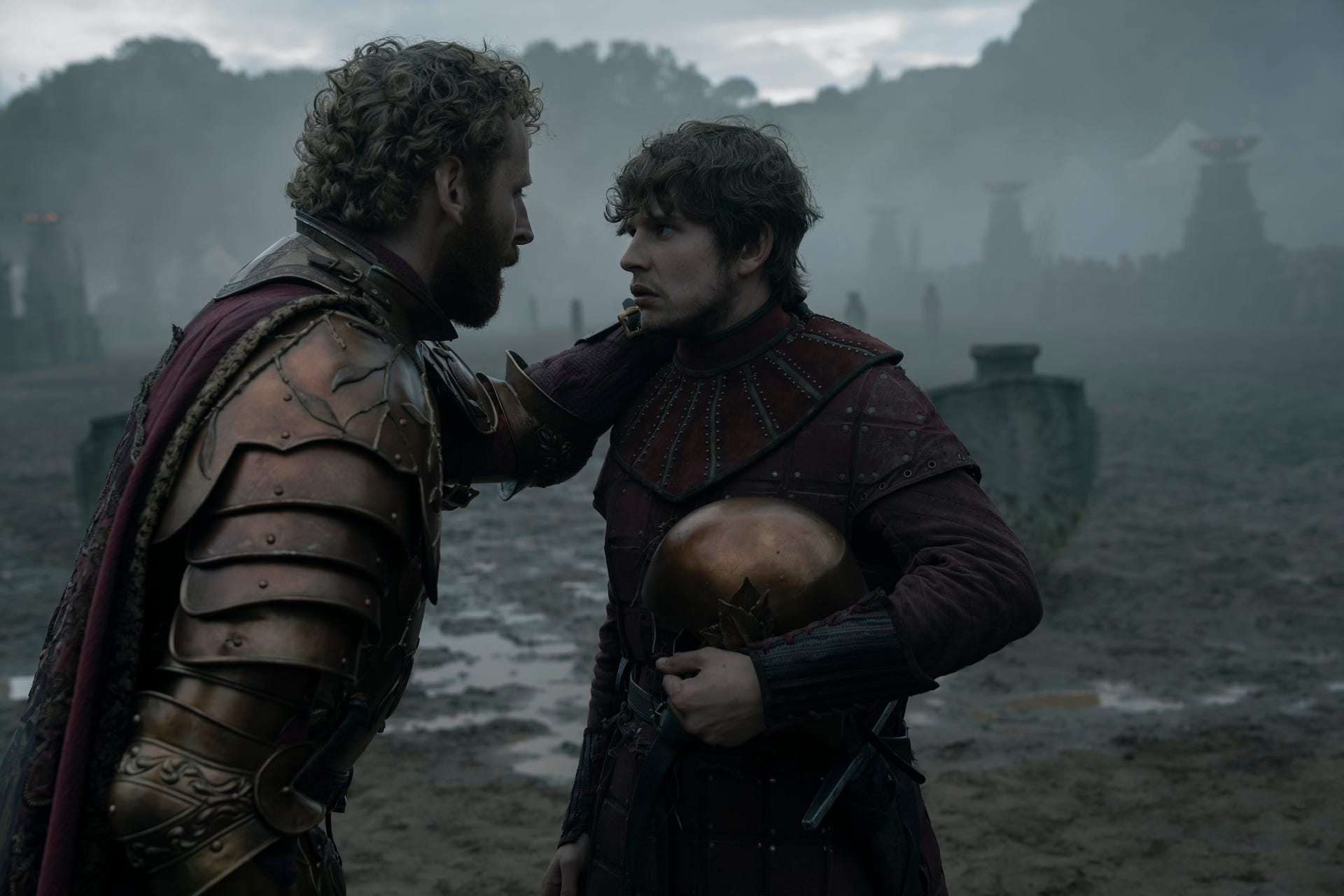
If the old man really did knight Dunk, what purpose would this flashback (or dream?) scene serve? Maybe to simply show what an unserious and inconsistent father figure Ser Arland was to Dunk. But it seems possible that A Knight of the Seven Kingdoms is going to wind up giving book readers more to chew on when it comes to the theorizing that Dunk’s journey began with dishonor.
What makes a true knight — ceremony and wealth, or chivalry and heart? And perhaps the more important question when it comes to Westeros…what is at stake for the realm when the “real” knights abandon honor?
We’ll have to see what Dunk’s trials and tribulations reveal next week.
Kim Renfro is the author of The Unofficial Guide to Game of Thrones and former TV critic and correspondent for Insider. She works in Los Angeles as a stay-at-home-mom, writer, and podcaster.
Missed having Kim’s informative verbal discussion on episode 4, hope all is well