
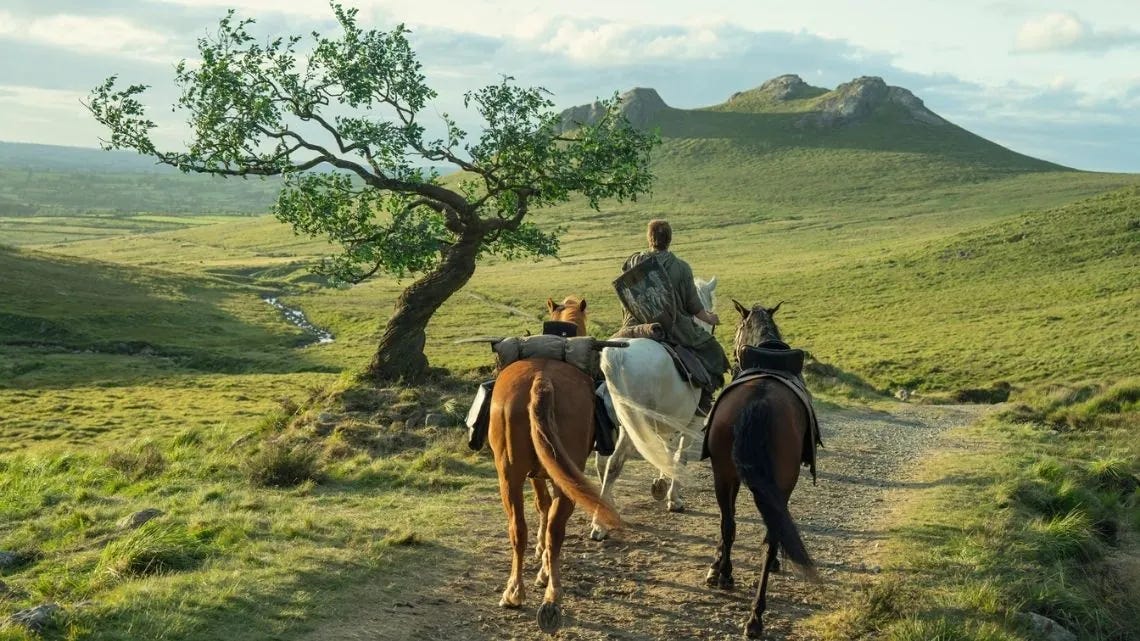
The Westeros universe is back, and with it comes TV analyst Kim Renfro to break down the best details you might not have noticed in “A Knight of the Seven Kingdoms.” Each week she’ll highlight how this latest adaptation of George R.R. Martin’s written stories connect back to “Game of Thrones” or “House of the Dragon” and help you spot all the best visual references and can’t-miss quotes. Subscribe to this newsletter (free) for all her updates.
To start this week, let’s first orient ourselves in the overwhelmingly massive fictional history that Martin has already put to pen. Here are some rapid-fire answers to questions you might have:
Who is Dunk? He’s an extremely tall orphan from Flea Bottom who was taken in by a hedge knight. Now 16 or 17, and alone once more, Dunk decides to try being a true knight for himself.
Where are we? This show takes place in the Reach, a southern region of Westeros ruled by House Tyrell. The Tourney is being held at Ashford, a small castle on the edge of the border just west of the Stormlands and north of Dorne.
When in the timeline are we? The year in Martin’s fictional fantasy history is 209 A.C. — about 100 years before the events of “Game of Thrones,” and a couple generations of Targaryen princes away from the “House of the Dragon” timeline — when the magical creatures have now died out.
What’s so special about Dunk and Egg? Oh, you mean aside from being two very endearing orphan boys who seem gentle at heart and deserve the world? The short stories themselves are different from Martin’s other writing, notably because the tales stay within Dunk’s own perspective. Part of the reason “Game of Thrones” was such a sprawling, epic universe had to do with the dozens of point-of-view (POV) characters he switched between with each chapter. Since “A Knight of the Seven Kingdoms” stays with the singular experiences of Dunk, the audience gets to relax into a different tone among the lower classes of Westerosi society.
What book is this show based on again? The show’s title come from a published compendium of three short stories about Dunk and Egg, appearing in print together for the first time in 2015 under the title “A Knight of the Seven Kingdoms.” Martin has been writing these stories since 1990s, and says he plans to publish more in the future. (A fun tie-in here for “Game of Thrones” fans is that Ser Duncan the Tall is one of Brienne of Tarth’s ancestors, according to Martin. For many fans, the highlight of the final “Game of Thrones” season was the scene in which she became Ser Brienne — an episode titled “A Knight of the Seven Kingdoms.”)
My 5 favorite writing moments
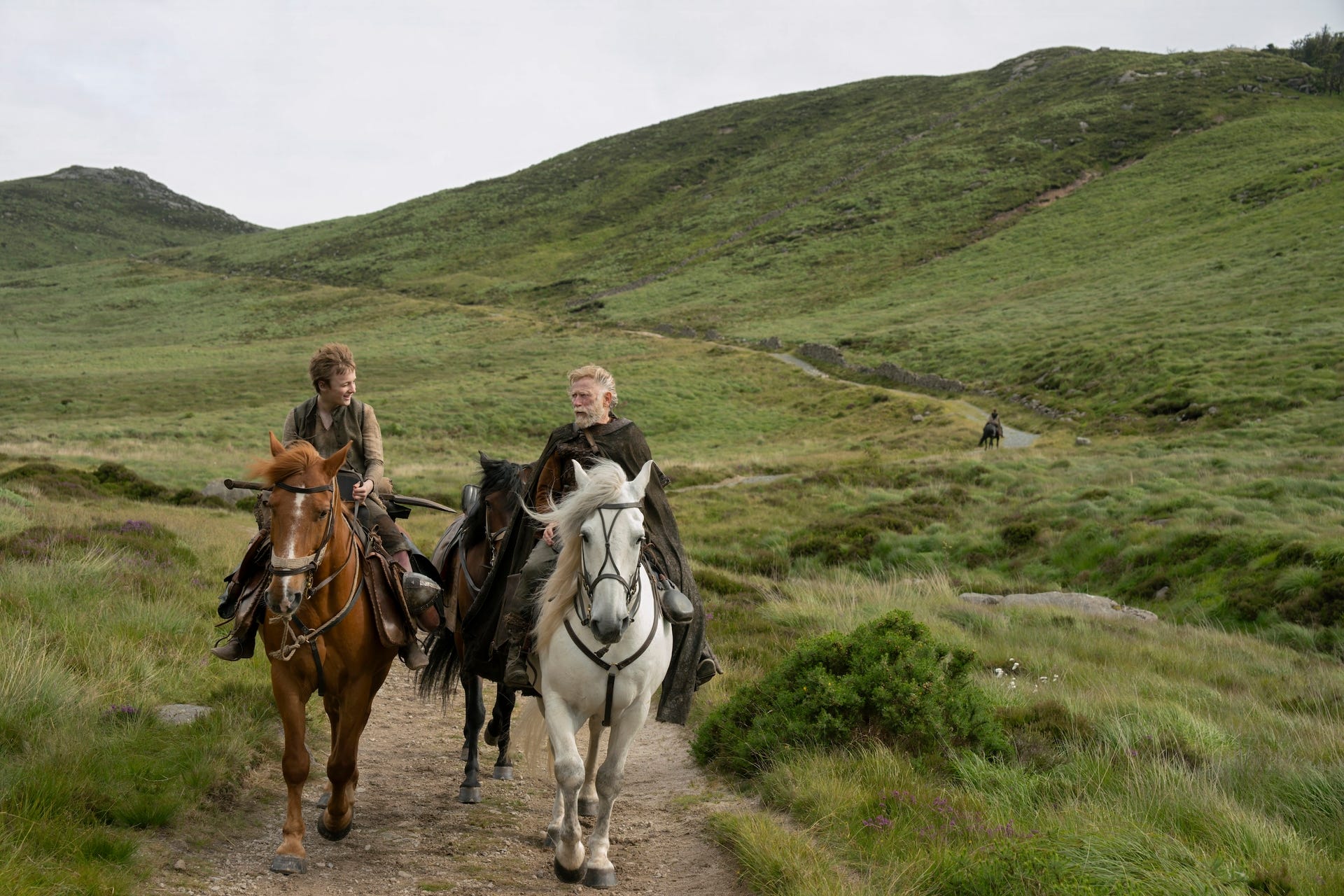
Sweetfoot, Chestnut, and Thunder - The entire opening sequence was brilliantly written and directed, bringing the three horses (a white mare named Sweetfoot, a brown fella called Chestnut, and the war horse Thunder) into the fold as characters. In Martin’s books, Dunk is only thinking to himself about selling them or going to a city. But showrunner Ira Parker lifted some of those internal thoughts and turned them in to a one-sided conversation with the only souls left who can witness Dunk’s character and integrity. As we see in one of the flashbacks, all three have been part of Dunk’s life since he was a young boy. Their importance is hammered home again as Dunk’s final words to Ser Arlan’s body was a pledge to take care of the horses.
The poop that wasn’t promised - I’m sure if you’re reading this, there was so sort of whiplash reaction in your mind and body when Dunk appeared to pledge himself to a grand adventure and the swelling music of Ramin Djawadi’s “Game of Thrones” theme song kicked in. Like it or not, HBO has the ability to get a Pavlovian response from show watchers with that musical cue — and showrunner Ira Parker came up with an effective way to break the spell. I’m pretty sure I literally covered my mouth when the scene quickly changed to Dunk spraying poop all over the green grass of that idyllic countryside scene. My immediate thought was that the visual gag (literally) of it all was a meta-commentary on the solemnity (and divisiveness?) of “Game of Thrones” and “House of the Dragon.” There was plenty of gross-out humor or torture in Martin’s other work, yet clearly there was a statement being made here since nothing about this moment is written in the books. Parker was asked about the choice during a TCA press conference I attended, and his answer changed my nonplussed reaction into a more genuine appreciation. Parker said that the script didn’t mention the exact “Game of Thrones” opening theme song, but instead he wrote that “a hero’s theme” would begin to play as Dunk imagined going off on his own to joust and fight and protect the defenseless. But then his nerves kick in. Death and dismemberment are just a likely outcomes as being victorious in a tourney when it comes to new knights like Dunk.
Here’s how Parker explained it in a recent Hollywood Reporter interview:
But then the reality of doing this, how difficult it is, how scary it is — that turns his guts to water. Because he’s not a hero yet, you know? All we’re trying to say here is that Dunk is not a hero yet. He’s just a nervy kid with a nervous stomach — just like me.
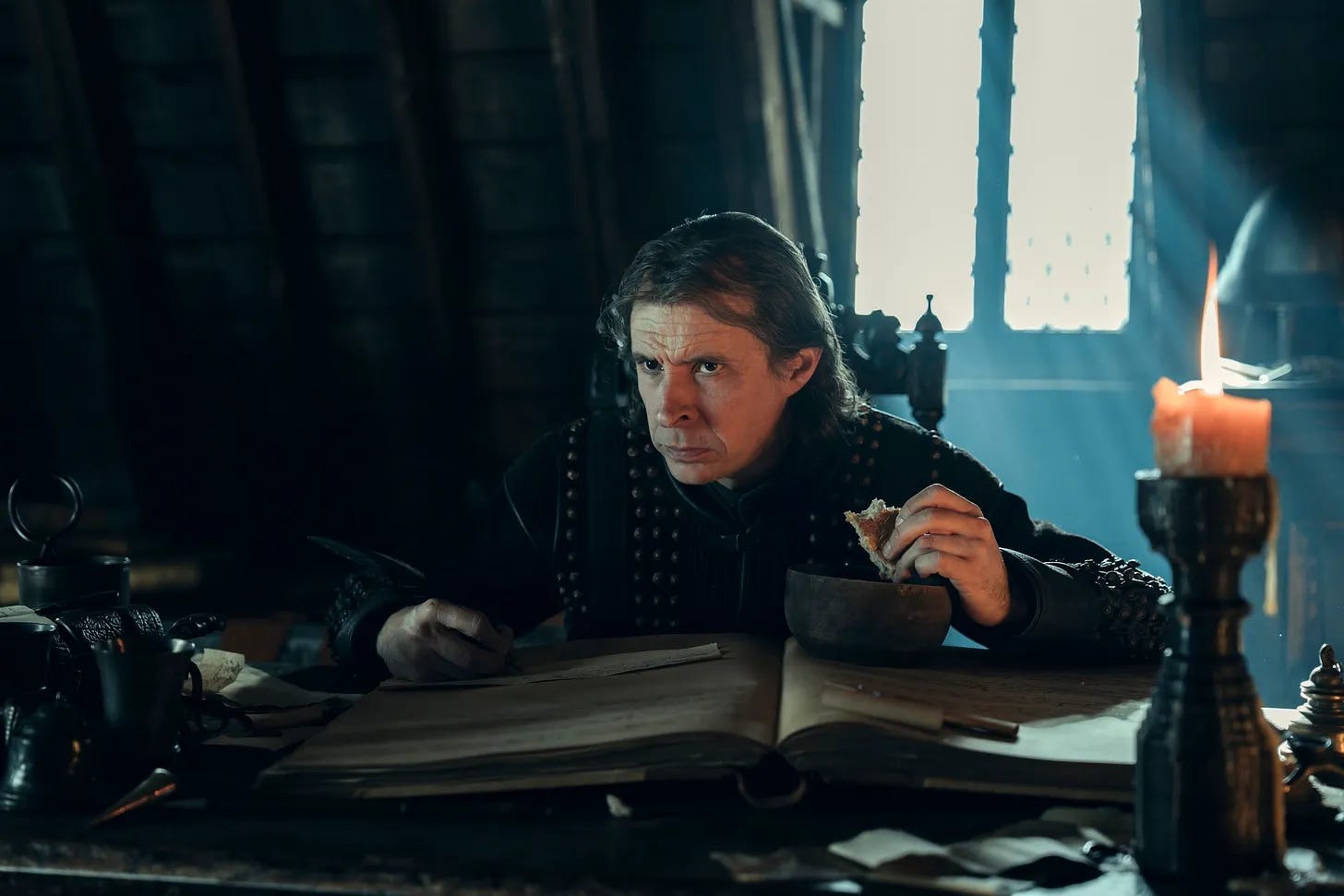
The Master of the Games - Everything about Dunk’s encounter with the Master of the Games was a delight. Actors Peter Claffey and Tom Vaughan-Lawlor played off one another’s slippery irreverence and solemnity so well, and I actually cackled when I realized the set up of Dunk’s name being revealed as a piece of bread was getting dunked into a bowl of stew. In Martin’s telling of the story, the Master of the Games is more straightforward (no jokes about “the Ashford chair” execution, for example). The way it was brought to life gave a wonderful blend of humor and realism to further set the tone of this tale. Between this scene and the longer conversations between Dunk and Lyonel Baratheon (more on that in a bit), “A Knight of the Seven Kingdoms” is already taking me back to the iconic dialogue-driven scenes from early “Game of Thrones” that enabled so many people to fall in love with the characters of Westeros.
The dance party - While Parker changed up the order of events from the books for several scenes in this first episode, a large amount of the dialogue and scene staging is lifted straight from the books. But a pleasant surprise for those who already read “The Hedge Knight” was getting to meet Lyonel Baratheon in all his brooding exuberance. In this part of the “Dunk and Egg” novellas, the “Laughing Storm” knight is merely listed as one of many noblemen present at the tourney, but it seems Parker saw the opportunity to show off the medieval-frat-house vibes of House Baratheon. An extended scene of Dunk being delighted by a buffet, only to feel ashamed for getting the customs wrong, and then being brave enough to turn it all around with a dance party? Flawless. Dunk deserves the joy!
“So the luck is ours alone?” - Just as Dunk’s thoughts about the horses were turned into spoken lines, Parker also uses this approach at the very end of episode, and goes a bit further by giving some of Dunk’s thoughts to Egg instead. In Martin’s version of the tale, Dunk merely thinks to himself about how falling stars bring luck to those who see them, and how the rest of the tourney folk are all under pavilion tents — leaving the luck to him. By having Egg be the person to wisely point out that fact, the pilot ends on a sweet note of mutual hope. And elucidates the budding relationship of shared-learning and vulnerability between Dunk and Egg.
BONUS: When the innkeeper said point-blank that she’s never known a joust to change the price of eggs, that’s straight from Martin’s original “Hedge Knight” story published in 1997. Talk about a depressing mirror for our world that I wish didn’t still hold water.
Kim Renfro is the author of the “Unofficial Guide to Game of Thrones” and former Insider entertainment correspondent and TCA member. She works in Los Angeles as a stay-at-home-mom and writer.