
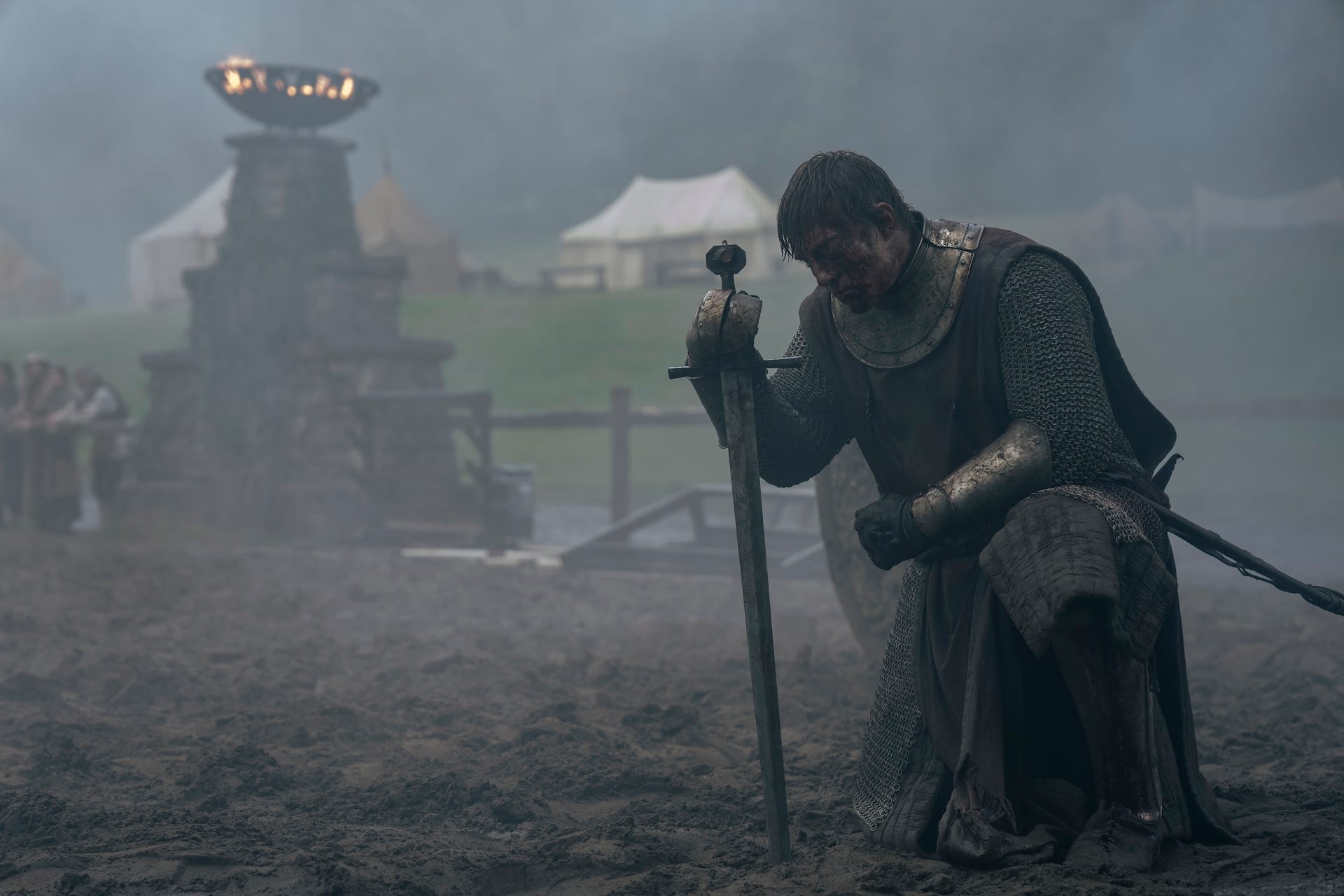
Sunday’s episode of A Knight of the Seven Kingdoms finally brought the glory of a tourney field to life as Dunk fought alongside knights for the first time in “battle.” While the drama unfolded, including a devastating flashback to young Dunk’s origins as a squire, readers of George R.R. Martin’s books were surprised by tweaks to the story or outright additions that added new depth to the tale.
Let’s take a closer look at some of the best details you might have missed.
Ser Lyonel, aka the Laughing Storm, once again had an MVP role in this episode that wasn’t in the original text
“Mother loved you best, eh? Shame. No man fights so fierce as one neglected by his mother.”
This line is not in the book, nor is Ser Lyonel Baratheon a significant character with a lot of dialogue in general. All of his best scenes in the season (the party in his tent when Dunk first arrives to the tourney, the tug ‘o’ war game, the song about Alice that inspired Egg’s line about hope) have been invented by showrunner Ira Parker and his writing team.
So of course my ears perk up in this scene when the straight-from-the-book dialogue from Baelor about how the kingsguard won’t harm him (“a prince of the blood” of the king), was changed to include this reference to both the Mother god and the real mothers (or lack thereof) who birthed each man about to fight to the death.
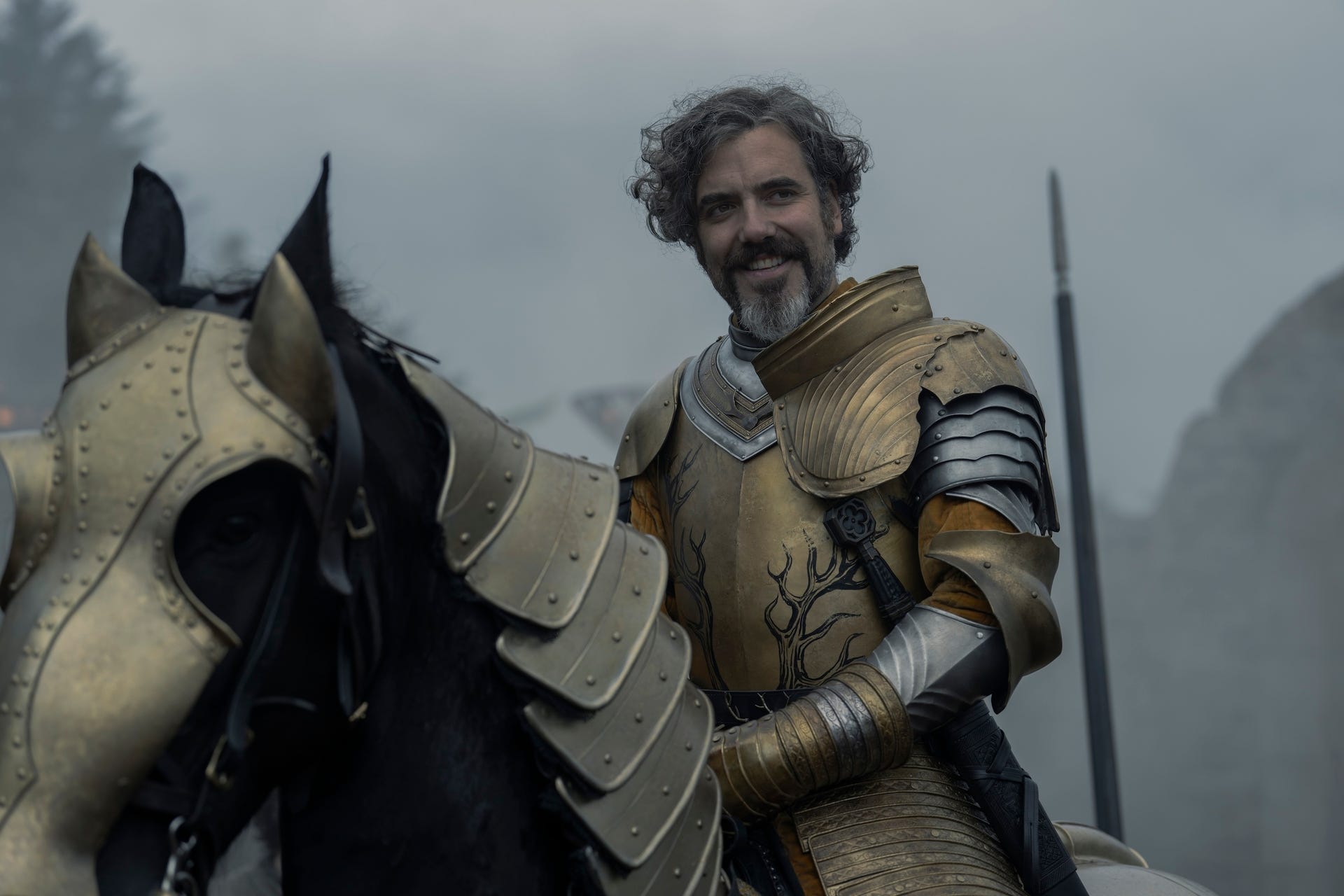
Dunk isn’t the only man on the field who lost a mother at a young age, or was somehow meaningfully neglected by her. Aerion and Egg’s mother died only somewhat recently in this timeline of events. Martin hasn’t (yet) expanded on the details of exactly how and when their mom, Dyanna Dayne, died, but one can presume it was sudden and tragic given how poorly all the men left behind are handling life at the moment. Maekar, Aerion and Egg’s father, has clearly lost a handle on the behavior and emotions of his children. And we saw last episode how Daeron, the eldest son, cannot handle being alive and sober at the same time.
In the book, it’s Lyonel who asks Prince Baelor if it’s “chivalrous” to use his status as heir to the Iron Throne as a way to effectively neutralize three of the seven people fighting for Aerion’s cause.
“My brother [Maekar] erred when he demanded that the Kingsguard fight for his son. Their oath forbids them to harm a prince of the blood. Fortunately I am such.” He gave them a faint smile. “Keep the others off me long enough, and I shall deal with the Kingsguard.
“My prince, is that chivalrous?” asked Ser Lyonel Baratheon as the septon was finishing his invocation.
“The gods will let us know,” said Baelor Breakspear.
Then Martin’s story cuts to the seven knights positioned across the field from one another, and the action kicks off.
The show’s version of the scene takes Lyonel’s minor dialogue from the book and gives it instead to Ser Robyn Rhysling, the knight who invokes and represents the Warrior. And when Baelor’s reply comes, the show adds in this new layer of meaning to the event by having Lyonel push back on Baelor’s beliefs here.
Lyonel implies that Baelor has been well-loved by his literal mother and the Mother goddess, and therefore might be naive about the ferocity they’re facing on this staged battlefield.
The tragedy of the episode is that Baelor was indeed underestimating the risk he was taking. Even though Dunk wins the trial by successfully beating Prince Aerion in a one-on-one fight, the victory turns pyrrhic when he realizes Baelor was mortally wounded in the head while fighting the other men on the field.
With Dunk representing the Mother, there’s a case to be made that each of the seven knights fighting for Ser Duncan have a clear parallel to one of the remaining seven gods.
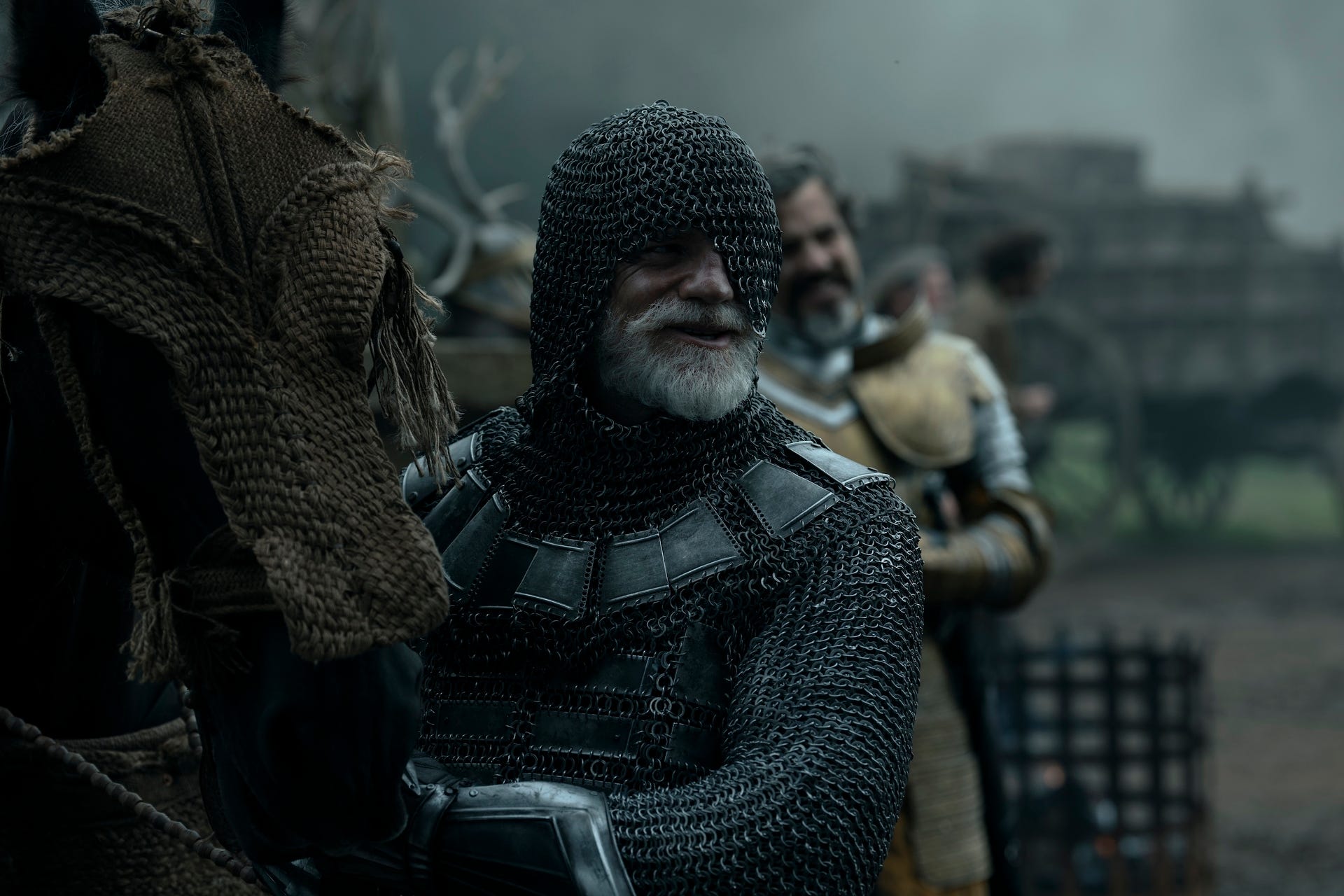
The Faith of the Seven is one of several religions in Martin’s fictional universe. The concepts and traditions of the Seven comes from the Andals, an ancient civilization of people who migrated from Essos to Westeros thousands of years before the events in this show. You can read more about the gods in depth here, but for now I’ll give a short rundown of what you should know about each one.
The Father: A stern, bearded man who delivers judgement.
The Mother: A loving, protective deity who gives the gift of life.
The Warrior: A sword-wielding man who invokes courage and strength.
The Smith: A man who both creates anew and fixes what is broken.
The Maid(en): A young and beautiful woman who guards innocence.
The Crone: An old woman who uses wisdom and light in guidance.
The Stranger: Described as genderless with a face of death.
I believe Dunk represents the Mother, whose favor apparently grants him a just victory. Throughout the episode, which is pointedly titled “In the Name of the Mother,” Dunk is thematically linked back to the Mother goddess. We see flashbacks of the young Dunk (played beautifully by Bamber Todd) clinging to a hope that his probably-dead mother might return to be with him one day. We watch him process the distress of seeing a man die on the battlefield after crying out for his mother one last time. We’re traumatized right alongside him as his childhood friend and love is murdered by the very men who are meant to protect the innocent of King’s Landing. We are rescued in our grief by Ser Arlan of Pennytree charging in to save Dunk from certain death by invoking the “name of the Mother!”
Some of these details about Dunk’s origins as an orphan of King’s Landing were present in George R.R. Martin’s first novella about Dunk and Egg. That story, “The Hedge Knight,” was first published in 1998 as part of an anthology about legends edited by Robert Silverberg. Nearly 30 years later, A Knight of the Seven Kingdoms is introducing a thematic connection between Dunk and the Faith of the Seven with a seemingly much more pointed intention.
Episodes three and four had show-invented moments or changes to dialogue and staging of conversations between Dunk and Egg that invoked fatherhood and the way a knight-squire relationship is mirror to a parent-child relationship. But here in the climax of the trial/battle, the Father is not the god turning the tides of battle. It’s the Mother.
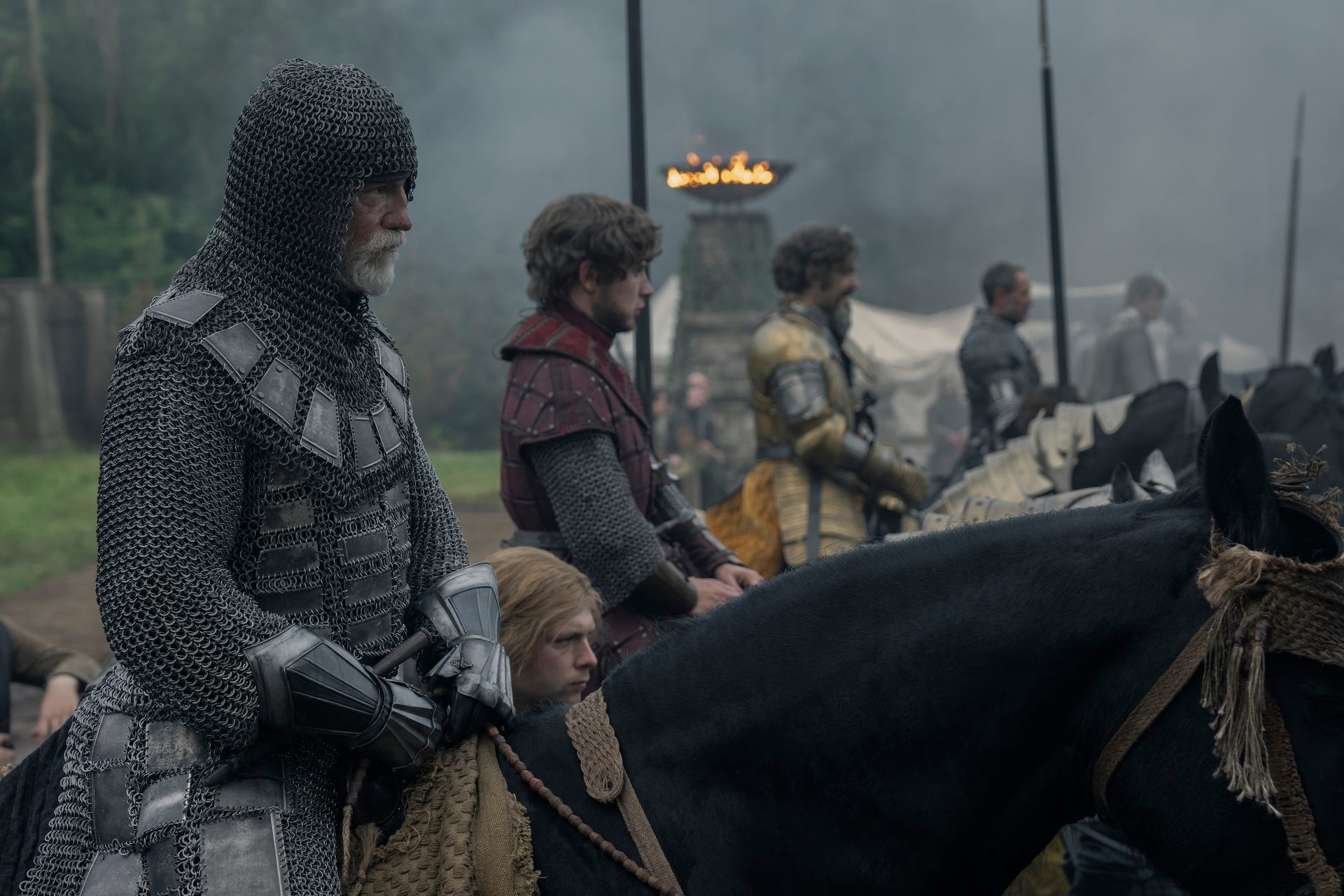
I think Baelor’s fate was determined by the Stranger. Of all the seven gods, the Stranger is the one most linked to death and the more mystical aspects of Martin’s fictional world.
Ser Robyn (the one-eyed, barefooted knight) already claimed to be fighting on behalf of the Warrior and I am wont to believe him.
Given the way Ser Lyonel stepped in as a fellow ally and protector of Dunk and knighted Raymun (plus his expertise on the Mother), I think he is representing the Father. In many ways Ser Lyonel keeps showing up for Dunk and Raymun in a paternal/fraternal manner that echoes what Dunk was looking for in Ser Arlan.
This would make Raymun Fossoway, now Ser Raymun, a good candidate for the Maiden — the youngest and perhaps most innocent of all the knights on the field. That leaves the two Humfreys as the Smith and the Crone, the gods associated with hard work and wisdom respectfully, and perhaps therefore most often fated to die in the brutal conditions of Westeros.
The show’s change sets up a much more tragic and life-changing moment for Dunk when Ser Arlan comes to his rescue “in the name of the Mother.”
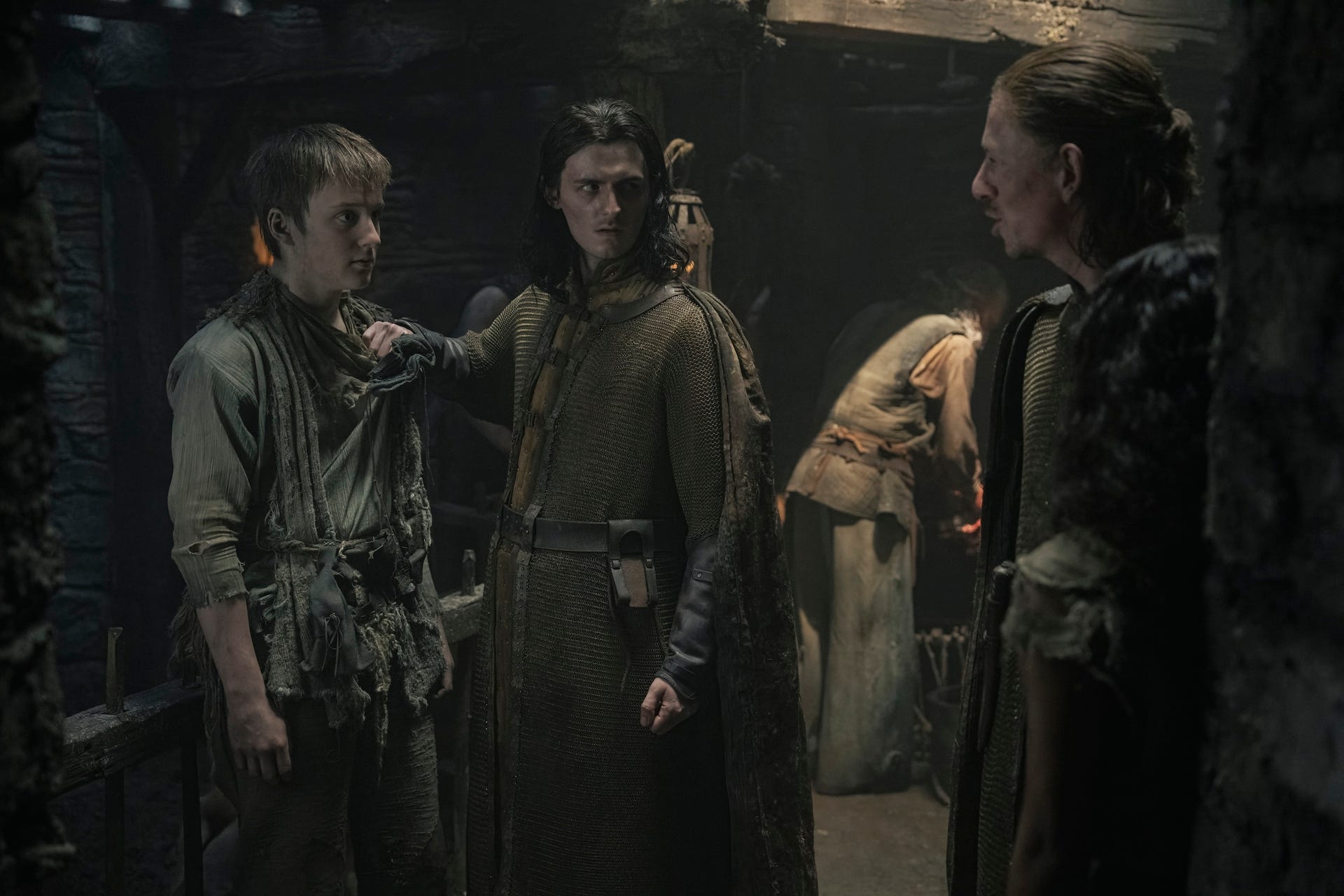
Rafe is mentioned in the third novella Martin wrote about Dunk and Egg, titled The Mystery Knight. That story opens with Dunk and Egg passing a head on a spike, and Dunk thinking back to the shenanigans he got up to in Flea Bottom with other orphans. Dunk recalls being both a beggar and a thief “in Flea Bottom, when he ran with Ferret, Rafe, and Pudding, but the old man had saved him from that life.”
The show’s version of events appears to change Rafe to be a young girl who Dunk was in love with and with whom he planned to escape King’s Landing before she was murdered by a member of the citywatch.
Book readers have not yet been given specifics on how Ser Arlan found Dunk and decided to make him a squire. In the Dunk and Egg novellas, Martin only has Dunk occasionally remembering how Ser Arlan “found him chasing pigs” around a potshop in Flea Bottom.
The show included the two details of Dunk indeed being behind a potshop and among pigs when he first sees Ser Arlan, but all of the other aspects of this flashback are embellishments. And what tremendously effective changes they are!
The detail I latched on to most of all was having Ser Arlan charging in to kill the two corrupt citywatch men who had just killed Rafe and were about to kill Dunk and only shouting: “In the name of the Mother, leave that boy be!”
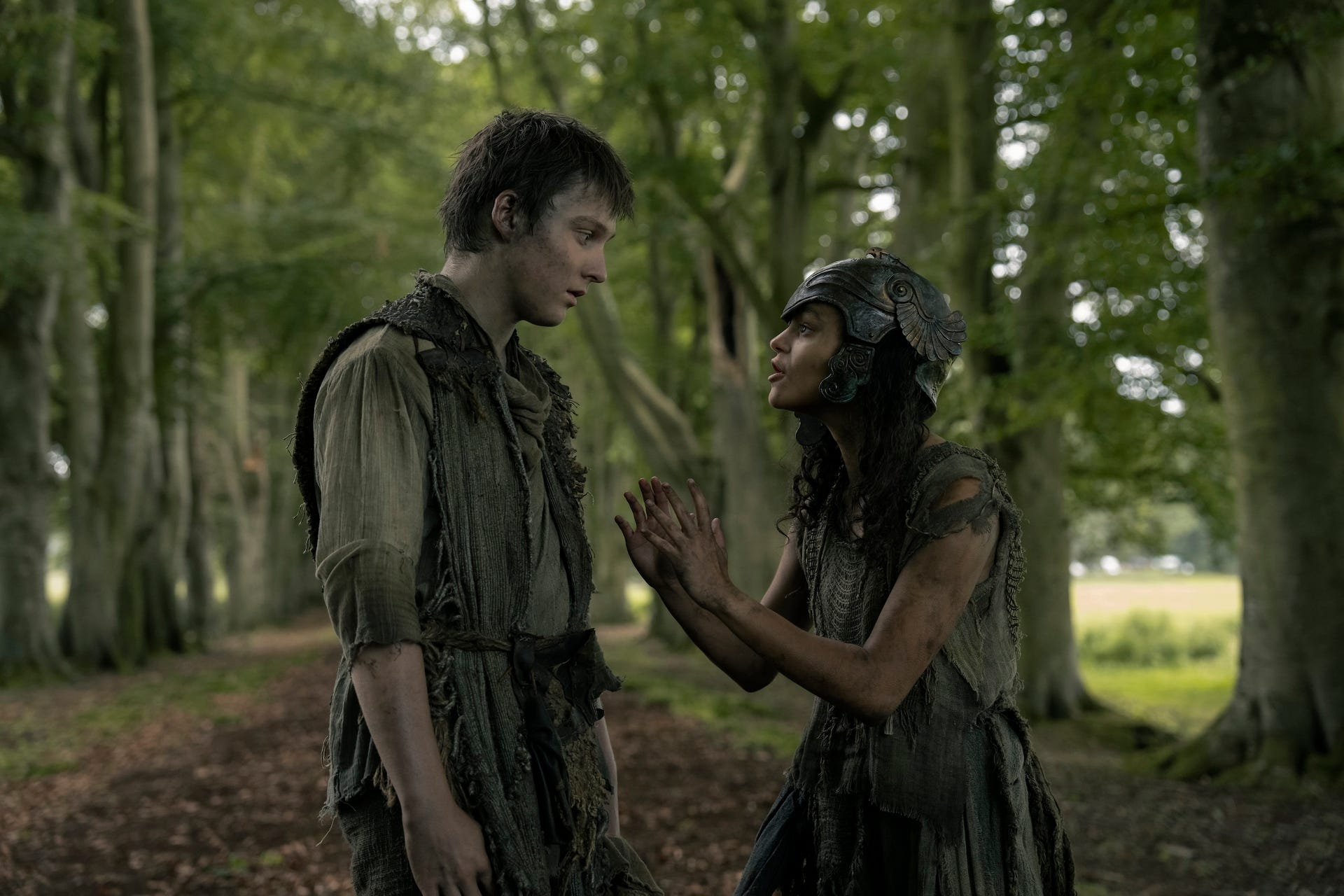
Once again, Parker and the writers are deliberately bringing the theme of the Seven back to the overall story, and emphasizing that Dunk and Ser Arlan are staking their honor and oaths of knighthood on the Mother.
Martin has not yet written out a full scene that includes the knighting ceremony in his books. In Game of Thrones, Jaime knighted Brienne with the following: “In the name of the Warrior, I charge you to be brave. In the name of the Father, I charge you to be just. In the name of the mother, I charge you to defend the innocent. Arise, Brienne of Tarth, a knight of the Seven Kingdoms.”
But last episode we got a glimpse of it when Ser Lyonel knighted Raymun. “In the name of the Mother I charge you to defend the young and innocent.” That change makes Dunk’s actions in saving Tanselle and his history with witnessing Rafe’s murder even more resonant with the Mother.
Last episode, as Baelor heroically entered the tourney arena, he explained his choice to Maekar as such: “This man protected the innocent, as every true knight must. Let the gods decide if he was right or wrong.”
The show’s expansion of Martin’s story is showing fans how all knights are not created equal in Westeros, literally and in spirit. Each knight, from the lowly hedge knights like Arlan, to the fanatical fighters like Robyn, and the glamorous lords like Lyonel, can choose which aspect of the vows they want to embody and to what extreme.
Dunk doesn’t sob and repeatedly say “I’m sorry” when Baelor falls to the ground in the book, and the added devastation in this moment could be a hint about his past.
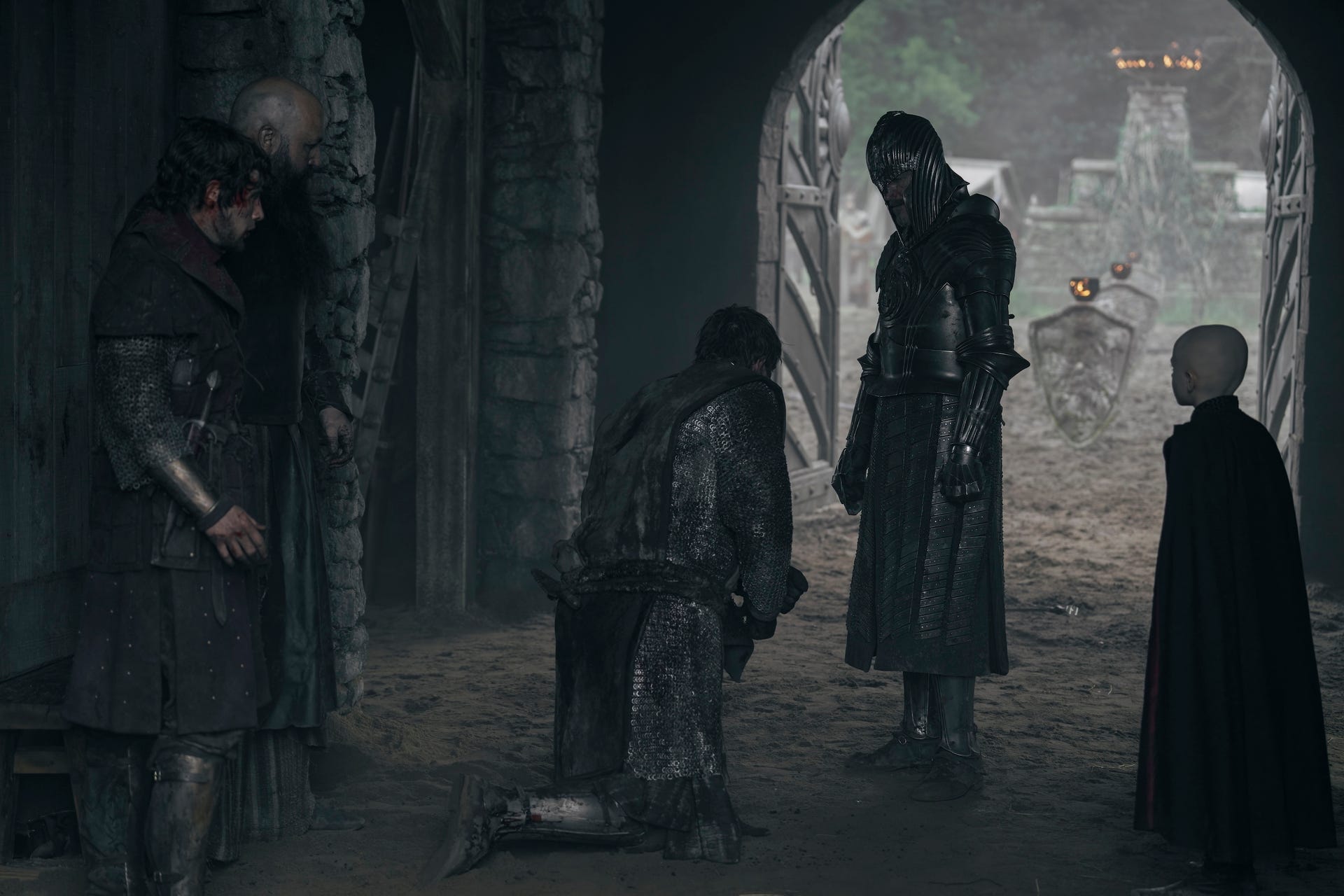
Here’s what the book section says:
“Here it comes,” Pate lifted the battered helm away. “Gods be good. Oh gods oh gods oh gods preserve…”
Dunk saw something red and wet fall out of the helm. Someone was screaming, high and terrible. Against the bleak grey sky swayed a tall tall prince in black armor with only half a skull. He could see red blood and pale bone beneath and something else, something blue-grey and pulpy. A queer troubled look passed across Baelor Breakspear’s face, like a cloud passing before a sun. He raised his hand and touched the back of his head with two fingers, oh so lightly. And then he fell.
Dunk caught him. “Up,” they say he said, just as he had with Thunder in the melee, “up, up.” But he never remembered that afterward…
I believe the devastating addition of a tearful apology to Dunk’s reaction of disbelief and horror is meant to be yet another new clue about the implication by Martin’s story that Dunk was never truly knighted by Ser Arlan. There’s a weight to Dunk’s guilt in this moment (and actor Peter Claffey’s performance) that stems from that lie seemingly leading to the unnecessary deaths in this fight.
Whose fault is it that this trial came to be? What does it mean to be chivalrous, and is it even possible to be knightly in all moments of one’s life? If Dunk had never decided to enter the tourney as a knight, would this have happened? Did the gods fate Baelor to die, or did Dunk and Arlan’s choices as hapless men trying to good in the world lead to a monumental tragedy in the Targaryen royal family? These questions and more will be on my mind as we enter the finale of A Knight of the Seven Kingdoms season one next week.
Kim Renfro is the author of The Unofficial Guide to Game of Thrones and former TV critic and correspondent for Insider. She works in Los Angeles as a stay-at-home-mom, writer, and podcaster.